

Quick answer: The 2026 Traverse and Acadia share a platform, a 328-hp 2.5L turbo engine, and a 5,000-lb towing rating, so this isn't a capability contest. Traverse wins on price and max cargo. Acadia wins on standard features and interior polish. Everything else comes down to trim, not badge. Full round-by-round breakdown below, plus what actually matters once car seats and a Georgia summer enter the picture.
The Setup: Two Badges, One Platform
Before the round-by-round breakdown, the honest baseline dealership brochures don't lead with: the Traverse and Acadia are built on the same GM platform, share the identical 2.5-liter turbocharged four-cylinder producing 328 horsepower and 326 lb-ft of torque, run through the same eight-speed automatic, and tow the same 5,000 lbs when properly equipped. Exterior dimensions land within half an inch of each other.
That means every round below is really a contest of trim strategy and price, not engineering. Worth knowing upfront so you're not hunting for a capability gap that doesn't exist.
Round 1: Price — Traverse Wins
The Traverse undercuts the Acadia by roughly $3,000 at comparable trim levels, and that gap sometimes widens further with current incentives.
Verdict: Traverse, by a real, consistent margin across every source checked.
Round 2: Cargo Space — Traverse Wins, Barely
Essentially a statistical tie. The Traverse holds a narrow, genuinely class-leading edge on maximum volume; the Acadia claws a fraction back specifically behind the third row.
What matters more than either max number is the everyday figure: cargo behind the third row with all seats occupied, since that's the configuration most carpool and grocery runs actually use, not the seats-folded maximum that only applies on days nobody's in the back.
Verdict: Traverse, but don't let a half-cubic-foot difference decide anything on its own.
Round 3: Engine, Fuel Economy, and Towing — Tie
No meaningful powertrain decision exists here. Identical engine, identical transmission, identical towing rating, nearly identical fuel economy. If you're towing a boat to Lake Lanier or a small camper for a weekend trip, both handle it identically.
"Don't pay for all-wheel drive unless you actually need it, towing in wet conditions, occasional North Georgia mountain trips, or genuinely slick roads. It adds cost and a small fuel economy penalty most Georgia driving doesn't require."
Verdict: Tie, and anyone claiming otherwise is splitting hairs that don't exist.
Round 4: Standard Features and Trim Polish — Acadia Wins
Traverse runs LT, Z71, High Country, and RS, plus rotating special editions. Acadia runs Elevation, AT4, Denali, and Denali Ultimate.
The Acadia's roughly $3,000 premium buys more standard equipment out of the gate rather than unlocking capability the Traverse can't match, and a more consistently upscale interior as you climb the lineup, culminating in Denali and Denali Ultimate trims that push further into luxury territory than the Traverse's High Country reaches. Traverse counters with a larger standard touchscreen and standard Chevy Safety Assist, including automatic emergency braking, lane keep assist, and forward collision alert, across every trim.
"Compare out-the-door pricing, not just MSRP. The Traverse's lower starting point sometimes widens further with current incentives, so get real numbers for both before deciding the gap is worth it."
Verdict: Acadia, if standard polish matters more to you than saving the $3,000.
Round 5: Third-Row and Car-Seat Livability — Tie, With a Catch
Both SUVs offer comparable third-row space, which tracks given the shared platform. The real variable isn't badge, it's second-row configuration. Captain's chairs, available on both, make third-row access meaningfully easier than a bench, since passengers walk through instead of climbing over, even though the bench technically seats one more person.
Both platforms offer LATCH anchors in the second row and tether anchors in the third as standard equipment. What varies in practice is physical access: a bench second row can make third-row LATCH installation an awkward reach, while captain's chairs generally give more working room to actually get a seat properly installed rather than just clipped in.
"Test the third row with your actual car seats and your actual kids before you buy, not just yourself sitting in it at the dealership. On-paper legroom doesn't tell you whether a rear-facing infant seat behind a tall driver's seat leaves any knee room for whoever sits next to it."
Verdict: Tie on hardware, but the deciding factor is which second-row configuration you choose, not which brand.
Bring This Checklist and Actually Test It
Spec sheets don't answer the questions that matter. Before you decide, do this at the dealership with your own gear, not the demo car seats on the showroom floor:
- Install your actual car seats in both the second and third rows
- Test third-row access with the second row in its normal driving position, not slid all the way forward
- Load your actual stroller, folded, into the cargo area behind the third row with all seats occupied
- Check whether the second-row fold is a genuine one-handed operation
- Confirm LATCH anchor access in the third row with the second-row seats installed
- Test the liftgate with your hands full, or check whether a hands-free or foot-activated liftgate is available on your trim
Round 6: Georgia-Specific Livability — Trim Decides, Not Badge
The Atlanta carpool test: A one-handed second-row fold matters more than it sounds like it should until you're holding a diaper bag and a coffee while loading a car seat in a pickup line. Test this in person on the specific trim you're considering; it's not consistent across every configuration.
The Georgia summer test: Rear-seat climate matters more here than in most of the country. A third row can run noticeably hotter than the front without dedicated rear vents or tri-zone climate control. Confirm this feature on the specific trim, not the badge, since it varies by trim level on both vehicles.
The coastal road-trip test: For a trip to Tybee, St. Simons, or Jekyll with all three rows occupied, behind-third-row cargo is the number that actually matters, not the seats-folded maximum. Both handle it comfortably; the deciding factor is usually second-row configuration.
The Lake Lanier tow test: Both tow identically up to 5,000 lbs properly equipped, enough for most small-to-mid-size boats common on Georgia lakes. Confirm the trailering package and hitch are actually included on your specific trim, and that current wiring matches your trailer's requirements.
Verdict: Neither badge wins this round. Trim selection does.
Final Scorecard
Two rounds to the Traverse, one to the Acadia, three ties or trim-dependent calls. That's a fair reflection of reality: these are the same vehicle wearing different trim strategies, and the right answer depends on which strategy fits your family and budget, not which logo you prefer.
Which One Should You Actually Buy?
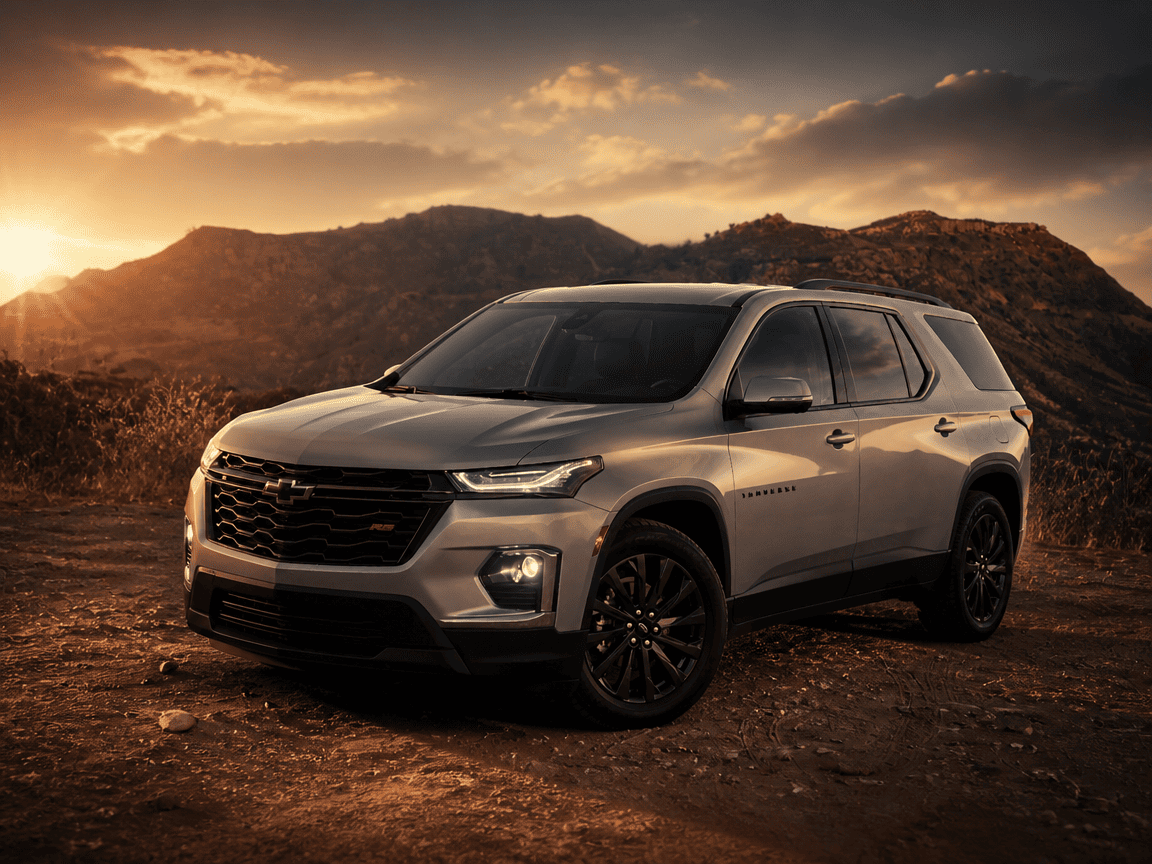
Budget-focused families who need space more than polish: Traverse LT or Z71. Same engine, same towing, same core third-row space, for meaningfully less money.
Families who want more standard luxury without upgrading every option individually: Acadia Elevation or AT4.
Buyers who want the most upscale interior GM's three-row lineup offers: Acadia Denali or Denali Ultimate, a genuine step above the Traverse's High Country.
Families prioritizing every last cubic foot for gear-heavy road trips: Traverse, by a narrow but real margin.
Off-road-curious families: Either. Traverse Z71 and Acadia AT4 apply comparable off-road packages to the same underlying platform.
Financing Either One Without the Payment Shock
A $3,000 sticker difference sounds abstract until it's translated into an actual monthly payment, and that's where a lot of families make this decision for the wrong reason: sticker price instead of real financed cost.
Pre-qualifying through GM Financial takes a few minutes, runs a soft credit check that won't affect your score, and gives you a real budget for both vehicles before you're comparing trims in a showroom under time pressure with kids in tow. NeSmith also offers Capital One pre-qualification as a second rate to compare. If your credit picture has a few dings, NeSmith's Credit Challenged resources walk through realistic options rather than an automatic decline.
Have a smaller SUV or sedan to trade toward either vehicle? Get a starting number through NeSmith's trade-in tool before your visit, it applies the same way regardless of which badge you land on.
Owning Either One Through a Georgia Summer
Whichever badge wins your personal scorecard, the ownership experience afterward matters as much as the buying decision. A three-row SUV logging carpool miles, road-trip miles, and the occasional boat tow needs more consistent upkeep than a car that mostly sits in a driveway, particularly on tires, brakes, and an AC system carrying three rows through July.
NeSmith's GM-certified service department runs factory-trained technicians and genuine GM parts on both Chevrolet and GMC vehicles, with appointments through the online service scheduler instead of a round of phone calls squeezed between school pickups. Before a long summer drive, it’s also smart to review our Georgia summer oil change guide and check your tires through NeSmith’s tire finder.
Frequently Asked Questions
Are the GMC Acadia and Chevrolet Traverse actually the same vehicle?
They share the same platform, engine, transmission, and core dimensions. Mechanically they're extremely close; the experience differs by trim level, not badge.
Which wins on cargo space?
Traverse, narrowly, on maximum volume (about 98 cubic feet vs. 97.5). The Acadia has a small edge specifically behind the third row. The practical difference is minor.
Do both tow the same amount?
Yes, both are rated up to 5,000 lbs when properly equipped with the factory trailering package.
Is the Acadia worth its roughly $3,000 premium?
Depends what you value. It buys more standard features and a more upscale interior, particularly at Denali trim levels, not any meaningful capability difference.
Which handles Georgia summer heat better in the third row?
Neither badge inherently wins this. Confirm tri-zone climate control or dedicated rear vents on the specific trim you're considering.
Should I get all-wheel drive?
Only if you have a specific need, wet-condition towing, occasional mountain driving, or slick roads. It adds cost and a modest fuel economy penalty most Georgia driving doesn't require.
See Both, Side by Side, Before You Score Your Own Rounds
Specs on a page only get you so far. NeSmith Chevrolet GMC carries both the Chevrolet Traverse and the GMC Acadia on the same lot, so you can walk from one to the other with your own car seats and your own stroller instead of comparing spec sheets from your couch. Browse the current Traverse and Acadia lineup before you visit. Ready to run your own comparison in person? Call (912) 427-2045, or reach out through NeSmith's contact page with questions before you make the drive.
Figures reflect commonly reported 2026 specifications from multiple manufacturer and dealer sources as of this writing. Pricing, EPA ratings, and cargo figures vary by trim and equipment; confirm exact numbers for your configuration directly with NeSmith before making a final decision.